ISC 2025: Controlling clostridia fermentation and preserving forage protein
At ISC 2025, new research confirmed that bonsilage lactic acid bacteria effectively control clostridia fermentation, reduce protein losses, and improve silage efficiency under real farm conditions.
International Silage Conference 2025
As agriculture resources get scarce, your operational efficiency can be key to sustainable growth. These challenges were at the center of discussion during the International Silage Conference (ISC) 2025 in Florida. As mentioned in our previous blog article, bonsilage contributed 11 posters and 8 more in collaboration with university partners. Together, they highlighted the importance of science-driven solutions for silage fermentation and feed preservation efficiency. In this fourth part of our ISC series, we explore bonsilage lactic acid bacteria (LAB) control of fermentation, actively inhibit clostridia and consequently improve nitrogen preservation at farm level.
bonsilage bacteria are specialized in preserving forage protein
In the first study, researchers screened a broad range of lactic acid bacteria for their ability to inhibit clostridia growth in vitro. Two strains were selected among 200 other strains for their production of antimicrobial proteins that inhibit clostridia.
These strains were then tested for their ability to drive desirable fermentation in grass silage in three independent studies, showing the ability to improve fermentation and decrease butyric acid formation.
FORTE 2.0 and ALFA 2.0: A New Generation of Haylage Protection
Based on these studies, bonsilage upgraded its clostridia-control portfolio! bonsilage FORTE and ALFA are now FORTE 2.0 and ALFA 2.0! They are representing a new generation of specialized control of undesirable fermentation for haylages.
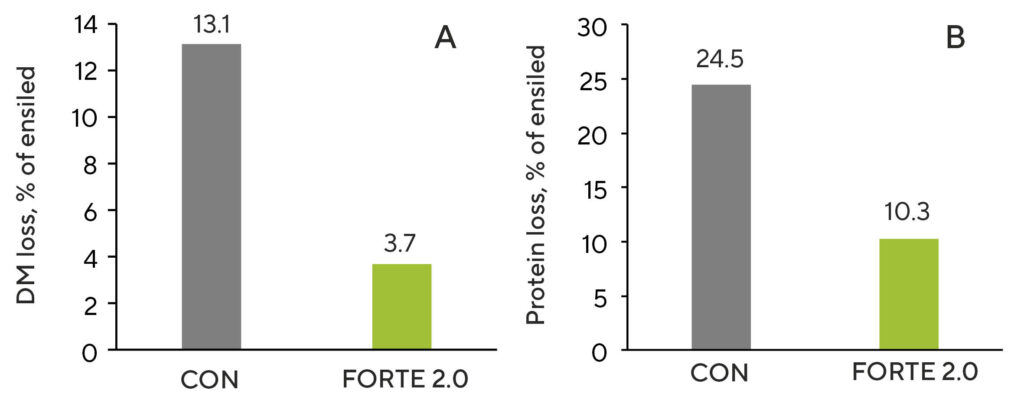
Figure 1. Effect of bonsilage FORTE 2.0 on DM (A) and protein losses (B) during grass silage fermentation (90d).
Proven Protein and Dry Matter Preservation Under Field Conditions
A second study was conducted in Austria, where clostridia is a wide spread issue. Recent surveys covering more than ten years of data show an average of 1.2% butyric acid in Austrian haylages. Mixed grass was ensiled at 23% DM, either untreated or treated with a homofermentative blend including the new strains. Remarkably, treated haylage had 9.5% lower DM losses and 14.2% lower protein losses. These numbers certainly translate into greater land-use efficiency and feed value.
Reducing Ammonia Formation for Better Nitrogen Efficiency
A third and fourth study investigated bonsilage homo- and heterofermentative LAB ability to reduce ammonia nitrogen formation during fermentation. While the process of ammonia formation during fermentation is common, high concentrations of this component indicate undesirable fermentation or even high protein degradation.
While many heterofermentative inoculants in the market focus on acetic acid fermentation for control of yeast and mold rather than the initial lactic acid fermentation, bonsilage heterofermentative products excel on both.
A study conducted at University of Delaware demonstrated that bonsilage ALFA was able to suppress enterobacteria population as early as two days of storage and consequently decrease ammonia formation in alfalfa silage. And finally, the fourth study shows a rapid pH decline when comparing bonsilage SPEED G and bonsilage FIT G with untreated silage, reflecting lower ammonia formation and greater protein preservation in grass silage.
ISC 2025 Confirms What Farmers Already Know
The research presented at ISC 2025 confirms what many farmers already experience in practice:
- bonsilage lactic acid bacteria drives efficient, stable fermentation
- They help with protein preservation
At bonsilage, we are committed to supporting farmers with science-backed inoculant solutions that keep feed stable, nutritious, and safe. Stay tuned for Part V of our ISC 2025 series, where we’ll share more insights from our poster presentations.