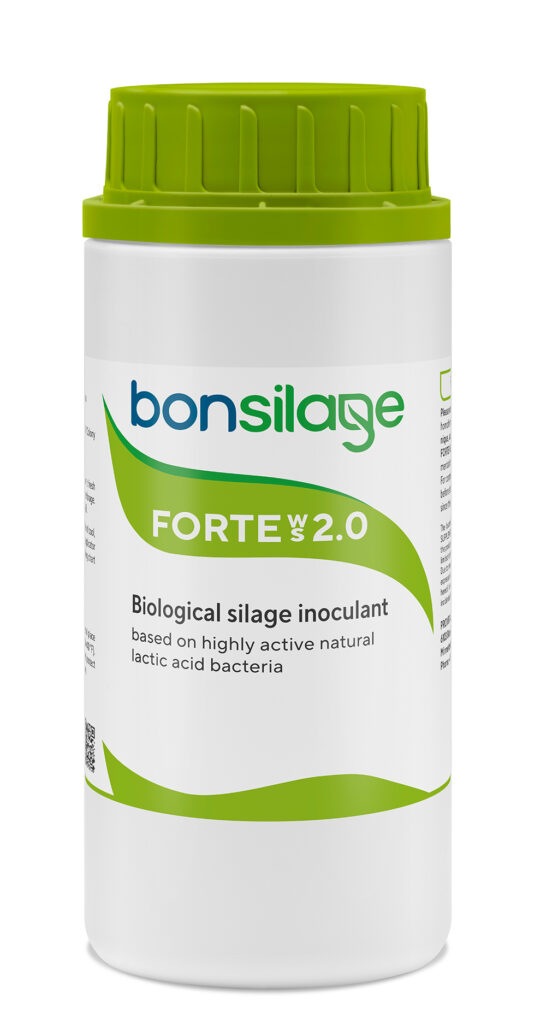
bonsilage FORTE 2.0 – Preserve more protein in silage
Protein is an important nutrient for dairy cows. It supports rumen microbial activity, milk production, growth, reproduction, immune function, and overall metabolic health. For high-producing dairy herds, ensuring an adequate supply of high-quality protein is essential for performance.
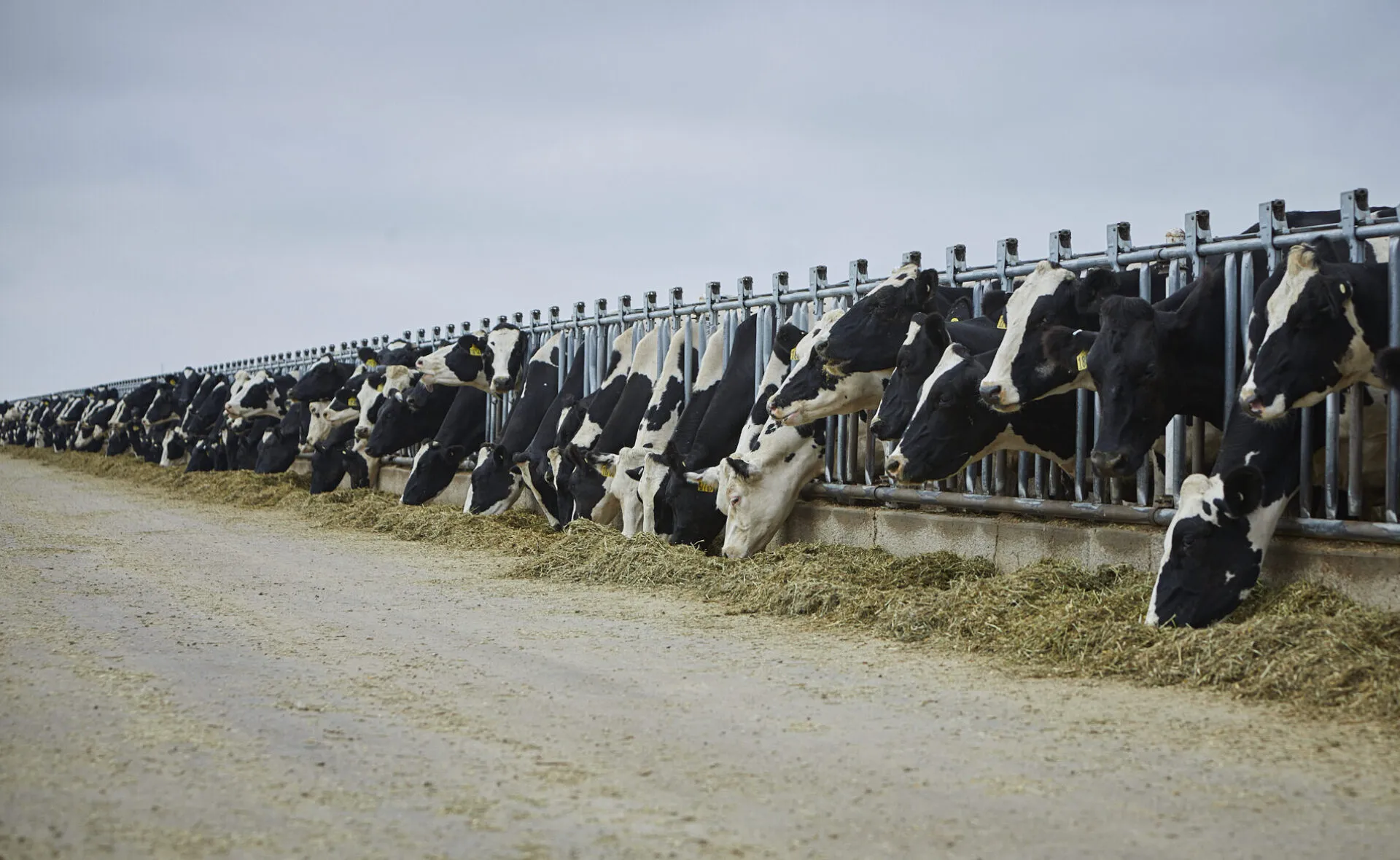
Improved Forage Quality with bonsilage FORTE 2.0
Protein is an important nutrient for dairy cows. It supports rumen microbial activity, milk production, growth, reproduction, immune function, and overall metabolic health. For high-producing dairy herds, ensuring an adequate supply of high-quality protein is essential for performance.
UNDERSTANDING PROTEIN IN DAIRY NUTRITION
In dairy nutrition, protein can be divided into two major categories:
 Rumen Degradable Protein (RDP)
Protein that is broken down in the rumen and utilized by rumen microorganisms.
Rumen Undegradable Protein (RUP)
Protein that escapes ruminal degradation and is digested later in the digestive tract, supplying amino acids directly to the animal.
Both fractions are essential. RDP fuels microbial growth in the rumen, leading to the production of microbial protein. RUP, meanwhile, provides valuable amino acids that contribute directly to milk production and other physiological functions. As milk production in modern dairy cows continues to increase, microbial protein alone is often insufficient to meet their amino acid requirements. This makes the preservation of true protein in forage an important factor in successful dairy nutrition.
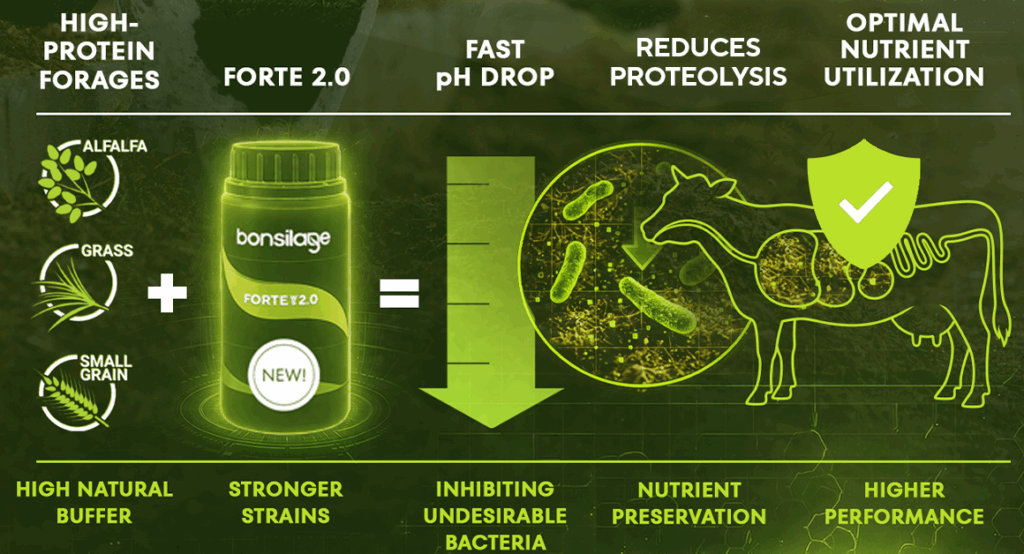
WHY PROTEIN PRESERVATION IN SILAGE MATTERS
Protein losses are difficult to avoid during the silage-making process. Uncontrolled fermentation and poor ensiling conditions can lead to extensive protein degradation, increasing ammonia formation and reducing forage quality. Protein breakdown during ensiling occurs mainly through two mechanisms:
Plant Protease Activity
Naturally occurring enzymes in the forage, begin breaking down protein immediately after harvest. Their activity declines once anaerobic conditions are established and pH starts to decrease.
Undesirable Microbial Activity
Clostridia, enterobacteria, and certain unwanted lactic acid bacteria can continue degrading protein during fermentation if conditions allow their growth degradation and increased ammonia production. The result is a loss of valuable true protein and reduced feed quality.

RESEARCH DEMONSTRATES SIGNIFICANT PROTEIN PRESERVATION
A recent study conducted at the HBLFA Research Institute in Austria evaluated the effects of bonsilage FORTE 2.0 on protein preservation in challenging, high-moisture grass silage conditions. The study examined grass silage containing 23% dry matter (DM) and 17% crude protein (CP) after 192 days of storage.
Performance with bonsilage FORTE 2.0:
Reduced ammonia production during fermentation
Reduced protein losses by approximately 58% compared to untreated silage.
These findings highlight the ability of bonsilage FORTE 2.0 to help maintain more of the forage protein originally harvested from the field.
DELIVERING MORE PROTEIN TO THE FEED BUNK
Every kilogram of protein preserved during ensiling represents more nutritional value delivered to the cow. Improving protein preservation not only enhances forage quality but also supports more efficient ration formulation and nutrient utilization. With bonsilage FORTE 2.0, producers can help safeguard one of their most valuable forage nutrients, ensuring that more true protein reaches the feed bunk and ultimately contributes to animal performance.
DESIGNED TO PROTECT SILAGE PROTEIN
Better Fermentation.
Better Protein Preservation.
Better Forage Value.
At bonsilage, we are committed to helping producers maximize forage quality from harvest to feeding.
The results from this recent research reinforce that effective silage management is all about preserving valuable nutrients and delivering the highest-quality forage possible.
Because great milk production starts with great forage.